Maintaining tip-top Emotional & Mental Health

Leyo – Lead Yourself to Happiness – is all about mental and emotional health and wellbeing ….. and helping people overcome their opposites – stress, anxiety, and depression. These have now reached epidemic proportions in the western world.
This makes this topic of interest and importance to everyone.

Anxiety, stress, and depression are getting more and more common, in fact, mental illnesses have taken over from back pain as the LEADING cause for people taking sick time off work. Work-related stress alone accounts for nearly half of days lost in the workforce every year (43% in 2014/15 and rising), which is costing our economy billions of pounds.

And it doesn’t just concern people who work. In today’s high speed, high-pressure environment, one in 4 people are depressed right now and the World Health Organisation warns that 1 in every 3 people will encounter these problems in their life. That figure doesn’t include people who have no diagnosable ‘problem’ but experience more troubling emotions than they would like. (Isn’t that most people ?) After all, where do you draw the line between coping with life being ‘a problem’ and coping with life being ‘a bit of a struggle at the moment’? You could say that nearly everyone is finding negative emotions are getting a bit more usual for them, or harder to shake, as outside stresses and pressures connected with living in today’s society become part of the commonplace.

Difficulties coping are even becoming common during childhood now, and for some children, the stresses of exams or peer pressure are too much, and by their teens or twenties, they are already starting to experience symptoms of panic, anxiety or depression, or something else.

It doesn’t have to be that way! And Lead Yourself is out to change those statistics!

Despite it being so common, in our society, awareness of these problems is still so low. Most people who suffer may not even know until they get diagnosed – with depression or anxiety, for instance. And many people are afraid to talk about it or admit it. There is still a stigma, whether real or imagined, and some people even feel ashamed of themselves for suffering.

Yet, consider this question. Who has never suffered from low self-esteem, insecurity, inferiority, procrastination, guilt, stress or worry, frustration, panic, sadness, or irritability? No one, right?!

What is ‘mental ill-health’ if not these ordinary everyday emotions, magnified? So it’s no wonder that anyone of us could literally be only 48 hours from long term chronic anxiety or depression, no matter how healthy or happy we are right now. This isn’t meant to scare you, but a sudden stressful life event can happen at any age or stage of life, to anyone, no matter what their background. A relationship breakdown, acrimonious divorce, highly stressful job or a nasty manager, redundancy, court case, bereavement, getting into debt, house repossessed etc, can happen to anybody – no one is immune.

No one is immune… That is unless we build up our mental and emotional resilience. That’s our immunity.

As with most things, prevention is far, far better than cure. And nearly all mental and emotional difficulties are preventable. Exactly the same way that many physical problems are preventable by good diet and exercise. And although prevention is better than cure, most are also completely curable too. Especially while they are relatively mild.

And it’s easier than you might think to do that.

When we think of mental health difficulties we think of drugs and months or years of therapy. And if you go to your doctor, that’s probably what you’ll be offered. But the good news is, that’s not usually necessary …. it can be done educationally. We can learn, with just a few minutes a day, (designed for busy people) to both overcome, and prevent mental health difficulties ever occurring, to generally build emotional resilience, and achieve vibrant happiness and wellbeing.

This is all part of a new …. (or, not so new perhaps) … approach.

In the same way, we eat healthily and exercise to prevent physical problems, how about doing similar things for our minds, to prevent mental problems? If you think about it, our bodies don’t work very well if we don’t give them a good diet, some daily exercise, and time to rest. That is, they work for a time but pretty soon, by our 30s, 40s or 50s, or if we’re lucky 70s or 80s, they start to break down. Well, our minds and brains need THEIR version of the diet, exercise, and R&R, too.

If you look into it, you find that there is nothing mysterious about happiness, wellbeing, and good mental health. Nothing. You do x and y and you’re happy, satisfied and relaxed in life. You don’t do x and y, or you do z instead, you are unhappy, dissatisfied or stressed.

Also, there are not 1 but 4 areas of life – body, heart, mind and spirit. We all know about diet, exercise and getting enough sleep for the physical part. But that leaves 3 out of the 4 not covered. That’s quite a gap – and that’s where Leyo comes in.

Because life is going to happen, regardless. Life involves difficulties, problems, things crop up. That’s what life is, for everyone. When you get knocked down as we all do, can you jump back up or do you have to haul yourself up slowly and painfully? Whether you get tripped up by every little (or big) thing that goes wrong, ride the waves of life, or use them as a springboard to great heights, is down to you – your thought patterns, habits, approach to life – all things that you can modify with just a few minutes a day, to ensure that you win the game of life. It’s just like going to the gym and drinking a green smoothie – for your mind. Leyo is your mind’s green smoothie.

Doing a few simple things like that also prevent and cure problems like anxiety and mild depression, permanently. There are simple steps everyone can take, incorporate into their daily routine, that will keep you happy, and maximise your mental and emotional wellbeing, throughout your life, no matter what the circumstances. As you progress, your performance at work increases, your level of happiness increases, your satisfaction in life increases,

What are those things? There are lots of options. Most great and successful people have been doing them for years. What you choose will be up to you and your preferences. But that’s what Lead Yourself to Happiness is all about. It’s like a one-stop-shop designed to achieve vibrant happiness and wellbeing in every area of life and to enable you to overcome the stress, anxiety, anger, and other unpleasant or unwanted emotions that get us down. You will start from wherever you are and end up with a complete toolbag of resources. You will be able to beat the blues and deal with whatever emotions trouble you in life, keep your well-being tip-top throughout your life, and enjoy fulfilling and satisfying relationships. Also, you’ll be a good way along the road to high emotional intelligence, raised consciousness, and the ultimate sign of wisdom, ‘Knowing thyself’.

Disclaimer

I am not a qualified doctor and this is not intended as an alternative to going to the doctor or seeking expert advice for any problem. Leyo does not advise or instruct. What it does is put you in the driving seat, because medication or therapy can only get you so far, as can even the most qualified expert. If all experts were definitive, and there was only one right answer, why would anyone ever need a second opinion?

Whatever you do to combat stress or anxiety and regain balance and wellbeing should always be in line with what you feel is right for you, rather than blindly following what someone else tells you. We believe you are the expert on your life, and you can choose whether to take the ‘one size fits all’ approach most often prescribed, or to continue with it, or work with us, or both together. Our approach is to start with you as a unique individual, to empower you in your progress or recovery, and to hold your hand throughout your journey toward lifelong vibrant happiness and wellbeing.
What is Emotional Intelligence?

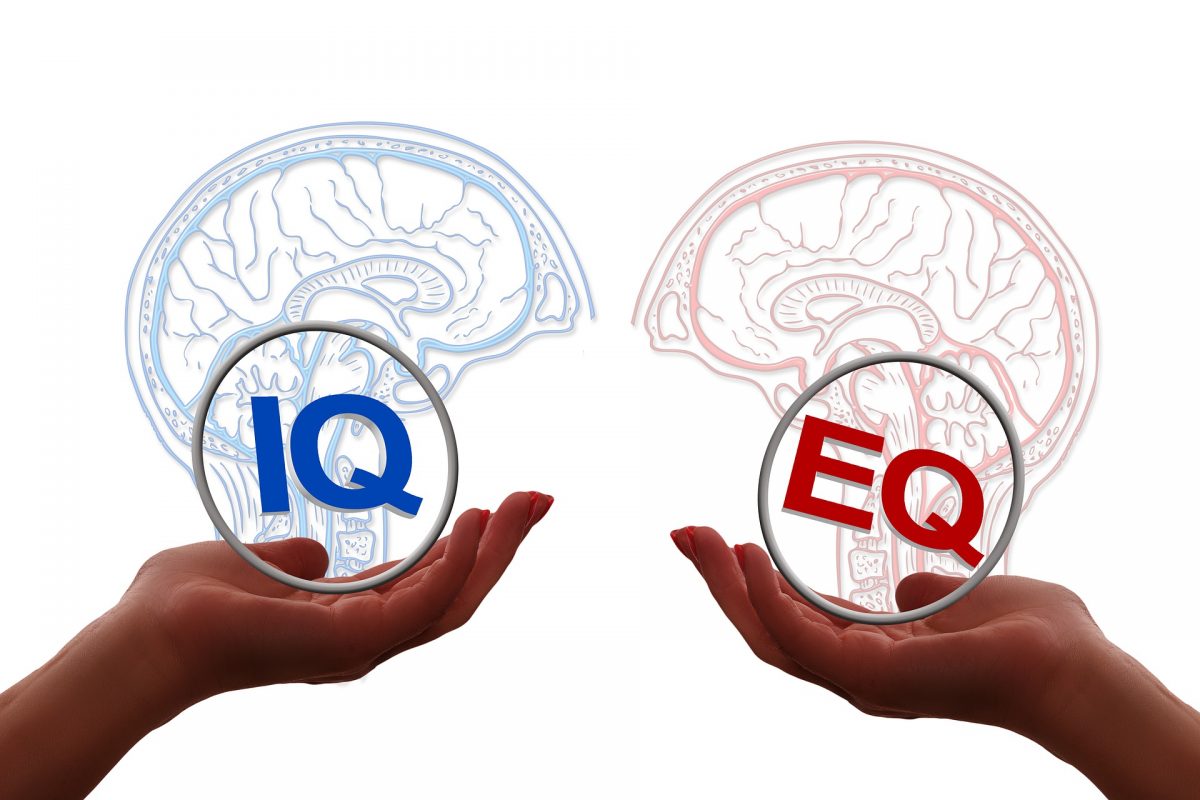
Emotional intelligence is a bit of a buzz word nowadays, but because it’s a fairly new concept there is still some confusion over what it really is. It was first coined in 1990 after psychologists became increasingly concerned with how little traditional intelligence tests told us about one’s success in life. Daniel Goleman brought the term to public knowledge with the publication of his detailed and brilliant book, Emotional Intelligence, in 1995. Since then it’s become increasingly well known to the extent that now, our emotional intelligence, or EQ, s widely accepted as more important than our IQ.

So what is Emotional intelligence, otherwise known as emotional literacy? This article goes a bit deeper and hopefully explains it a bit more. Please feel free to give feedback at the bottom, or ask any questions.

What is Emotional Intelligence?

You could say Emotional intelligence affects, even dictates, your success or effectiveness in every single area of life – from home, work, family, finance, career, social life – and everything in between. It’s arguably more important now than ever before because there are more people than ever before, more complexity in our world, more conflicting needs, and more technology.

A child with emotional intelligence (EI) is more affectionate towards their family, has more friends, less behavioural problems (eg aggression), more confidence, will get upset less often, and learn better so achieve better grades.
An adult with high EI will progress further in career or work, have better physical health, is more positive and optimistic, more friendly and nicer to be around, more affectionate, have closer friendships and happier long term relationships, and can persist in the face of frustrations or setbacks.

Our Emotions in the Brain

The brain has a few different sections, or parts, that evolved at different times during our development into the animal we are today. The emotional part of the brain (also known as ‘mammalian’ because we share this with many other mammals) is the largest and by far the most powerful part of the brain.

This is the part that’s responsible for our very survival. The emotions we feel, especially the negative ones, developed millions of years ago to keep us alive in our original native home, the forest or jungle. This is also why emotions can overwhelm us so easily – they are powerful because they are designed to keep us alive in the face of danger.

The Power of Emotion

Because of the role emotions play in our survival, they are literally the most powerful force in our lives, so powerful that if uncontrolled they can wreak havoc. When we’re swept away by a strong sudden emotion such as panic, the whole of the rest of the brain and parts of the body more or less stop working, until the threat is overcome. We go into what’s called a high arousal state where our immune system all but stops, we don’t feel hungry, thirsty or tired, we stop digesting our food, lose our sexual urge, and our body is flooded with the stress hormone cortisol.

You can see that those high arousal states take a lot of our body’s resources. Which is fine because it was designed to enable us to escape a predator – after which we would return to the relaxed state once back in safety, 15 or 30 minutes later. However, in today’s world, many people live in a state like that most of the time, which will obviously take a huge toll on our bodies.

Our emotional intelligence could be seen as our ability to be aware of, accept, understand and handle the surge of those powerful emotions in ourselves. That is, without suppressing them, and without expressing them inappropriately. Quite an uncommon skill when you think how many people try and deny or escape their emotions through drink, drugs or other addictions, suppression or denial, and how many of us have difficulties with managing our anger, go into depression or suffer from long term anxiety.

The other side of emotional intelligence – empathy towards others

Another aspect of emotional intelligence is our ability to accept, understand and cope with those same powerful emotions in others – the driving force behind nearly all their (and our) behaviour. In a word, empathy. This allows us to connect or bond with others. It also enables us to make sense of and be at home in the complex and highly social world we live in.

Elements of emotional intelligence

Emotional intelligence can be divided into 2 broad areas, our own emotions, and those of others.

There are 5 aspects of emotional intelligence:

  • Awareness or recognising our emotions (including acceptance of them),
  • Managing or handling strong negative emotions,
  • Marshalling our emotions in the pursuit of a goal, or delaying gratification – in short, maturity,
  • Awareness of or understanding the emotions of others,
  • Handling relationships, or ‘Social intelligence’.

I’ll go through each of these, and how to develop them, in future blogs and videos. So stay tuned!

Thanks for reading – if you enjoyed this please share the link with your friends, write a comment below, and come back soon for more info and ideas on how to improve your mental & emotional wellbeing, and basically move towards living a vibrantly happy life.

Till next time! Marina.

Part II – The Discovery of Emotional Intelligence

Part III – Emotional Intelligence and the Planet

How Emotional Intelligence was born

In the late 20th century, it was becoming more and more apparent that traditional measures of intelligence, or IQ, were unreliable as a predictor of success in life. In fact, it is not uncommon to find someone with an IQ of 160 (near-genius level) working for someone with an IQ of 100 (absolutely average).

So what is the defining factor of life success ?? How can you measure it? And how can we tell how happy or well adjusted a child will grow up to be?

Although the term ‘emotional intelligence’ was first used in 1990, you could trace the beginnings of its discovery back to the Marshmallow test (see below), a groundbreaking experiment conducted in the 1960s with 4-year-old children. This test found that the ability to delay gratification was twice as powerful a predictor of their SAT results as IQ, and poor impulse control was also found to be a predictor of later delinquency.

Peter Salovey and John D. Mayer actually coined the term ‘Emotional Intelligence’ in 1990 and conducted extensive research to develop ways to measure it and explore its significance. For instance, one study found that people who scored high on emotional clarity (the ability to identify and give a name to their moods) recovered more quickly after being upset. In another study, individuals who scored higher in the ability to perceive and understand others’ emotions were better able to respond flexibly to changes in their environments and build supportive social networks.

The marshmallow experiment

One key aspect of emotional intelligence is the ability to delay gratification and resist the emotional impulse. The marshmallow test, a very simple experiment, began in the 60s in a preschool on the Stanford University campus. Four-year-olds were sat in a room, and each had one marshmallow put on the table in front of them. They could eat it straight away but were told that if they could wait for about 10 minutes until the researcher returned from an errand, they would be given a second marshmallow as a reward. As they gazed at the delicious marshmallow sitting tantalisingly within reach, about a third of the children couldn’t resist and grabbed it.

There are no psychological skills more fundamental than resisting impulse. 12-14 years later, the emotional and social difference between those that grabbed versus those that were able to wait for the reward was dramatic. The latter in adolescence were more socially competent, personally effective, self-assertive, and better able to cope with the frustrations of life less likely to go to pieces or regress under stress. They embraced challenges and were more persistent in the face of difficulty. They were more confident, honest, trustworthy and dependable, and took the initiative more. Also, they academically performed better, were more responsive to reason, and eager to learn.

The 1/3 of the group who grabbed, in contrast, were more shy, stubborn, indecisive, easily upset by frustrations, immobilised by stress, prone to jealousy, and more likely to overreact with sharp temper, therefore, provoking arguments and fights.

Emotional Intelligence and the Planet

What do us and the planet have to do with emotional intelligence? One way of describing emotional intelligence is our ability to override our animal instincts. Our animal or emotional brain, being the most powerful part of the brain, has the upper hand at birth and as babies. Think of infants – when they’re happy they are so joyful they hug and kiss everything in sight. But when they don’t get what they want, they get angry and frustrated and have a huge tantrum. If we stayed that way as adults, we would cause chaos – we would just follow our animal impulses which are to get our own needs met to the exclusion of everything else – for food, drink, sex, fighting to gain control or primacy. Rather like animals. Or politicians!

You could see the human world as gradually gaining emotional intelligence, or maturity, on a global scale in recent years. All through history we just took whatever resources we wanted, regardless of the cost. We destroyed forests, habitats, dug up coal and oil, and caused massive extinction. In the 20th century alone the death toll of humans at the hands of other humans stands at 100 million-plus. We wanted to eat lots of meat so we keep animals in the most incredibly cruel and inhumane conditions to make our meat as cheap as possible, and we treat it as normal to tear billions of calves from their mothers at birth (plus forced annual pregnancy) in order to supply our dairy industry. Imagine the outcry if even one human mother was deprived of her baby nowadays!

That’s how everyday business always used to operate, as well. To be successful, even as late as the 80s, we learned that you take what you can from others and do whatever it takes to get ahead, regardless of who gets hurt in the process. It was during that decade that Steven Covey’s groundbreaking book, The Seven Habits of highly effective people, came out. That was one of the first works in modern times that demonstrated what emotional intelligence looks like in practice, and how it can work in business and at home. It was maybe the beginning of a new age of living responsibly and ethically.

Unfortunately, big agribusiness still operates in the slash and burn way – chopping down ancient forests and habitats for palm oil and cattle grazing, and continuing to burn oil and coal even though we now know the consequences. However, signs are hopeful that these things are gradually beginning to change, although having people like Trump and Bolsinaro in power more recently represents a big step backwards.

Now we are just waking up, and human beings, at last, are beginning to care about something other than themselves. Undoing the havoc we wrought before is going to take a while but at least we are now aware of it and it’s on the agenda.

Whether we survive as a species or become extinct like the dinosaurs depends on our response to the global climate crisis. Watch this space…